
Wasp Control Sydney
Wasps may establish nests beneath eaves, inside wall cavities, in trees, sheds, gardens or underground. Some species can become aggressive when their nest is approached or disturbed and may sting repeatedly.
Pest In The West provides professional wasp-nest assessment and treatment for homes and businesses across Sydney. We identify the activity, locate the nest where possible and recommend a suitable treatment.
What wasps look like
What Do Wasps Look Like?
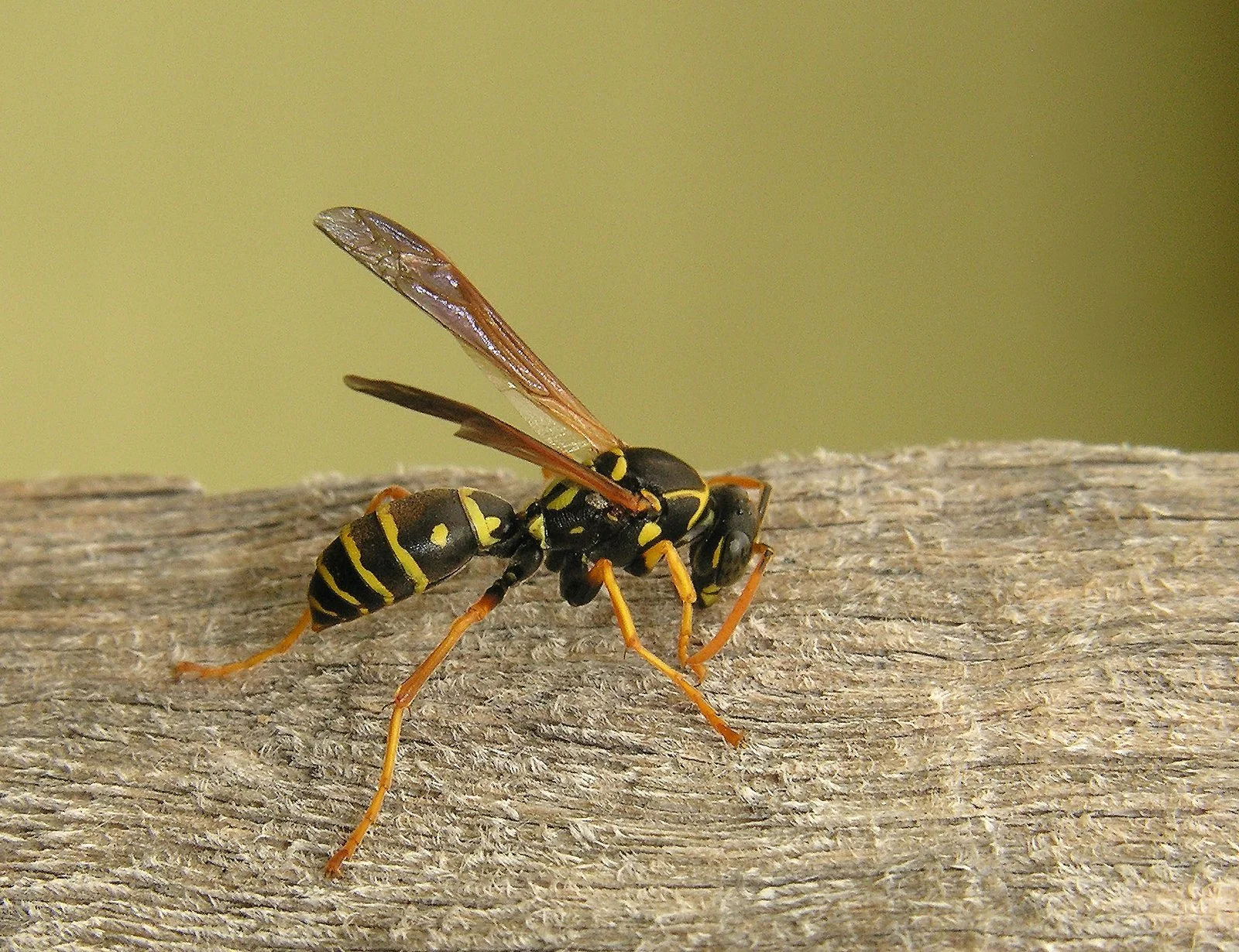
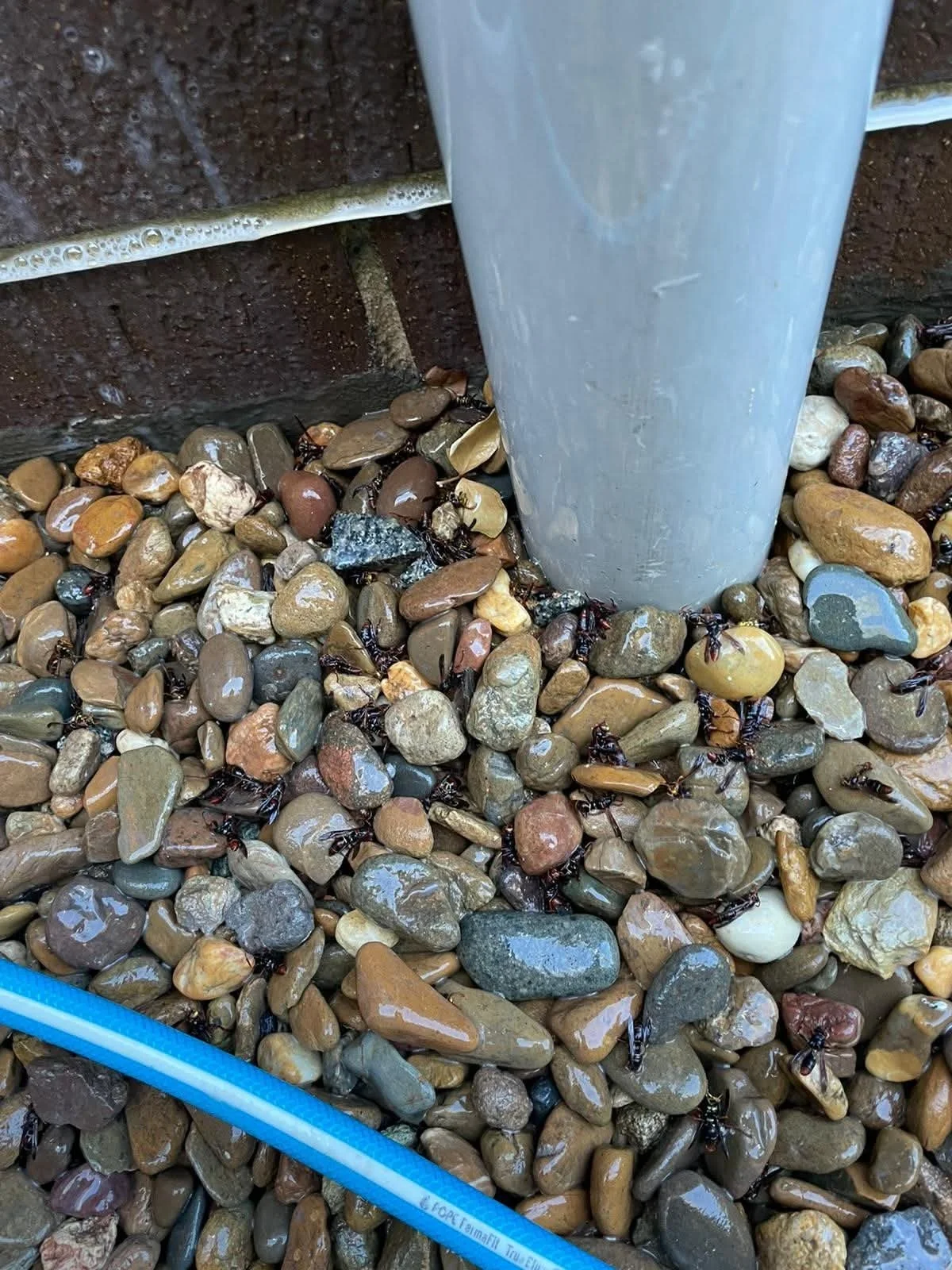
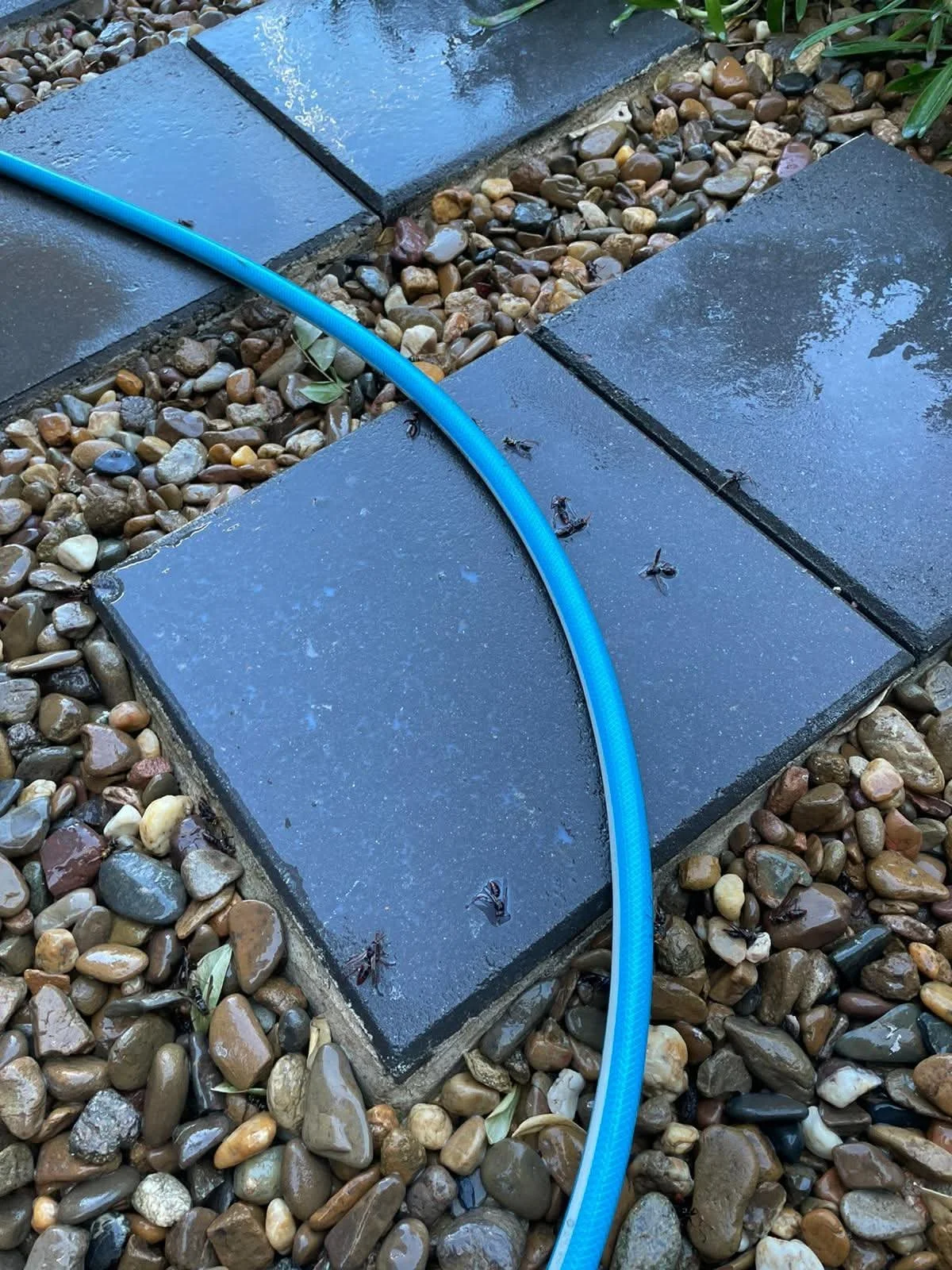
Wasps generally have slender bodies, narrow waists, two pairs of wings and smooth or lightly haired bodies. Their appearance varies by species and may include black, yellow, orange or reddish-brown markings.
Wasps can sometimes be mistaken for bees. Bees are generally hairier and play an essential role as pollinators. If the insects are bees, a beekeeper or bee-removal specialist may be more appropriate.
Avoid approaching the nest to take a close-up photograph.
Common wasps around Sydney properties
Paper Wasps
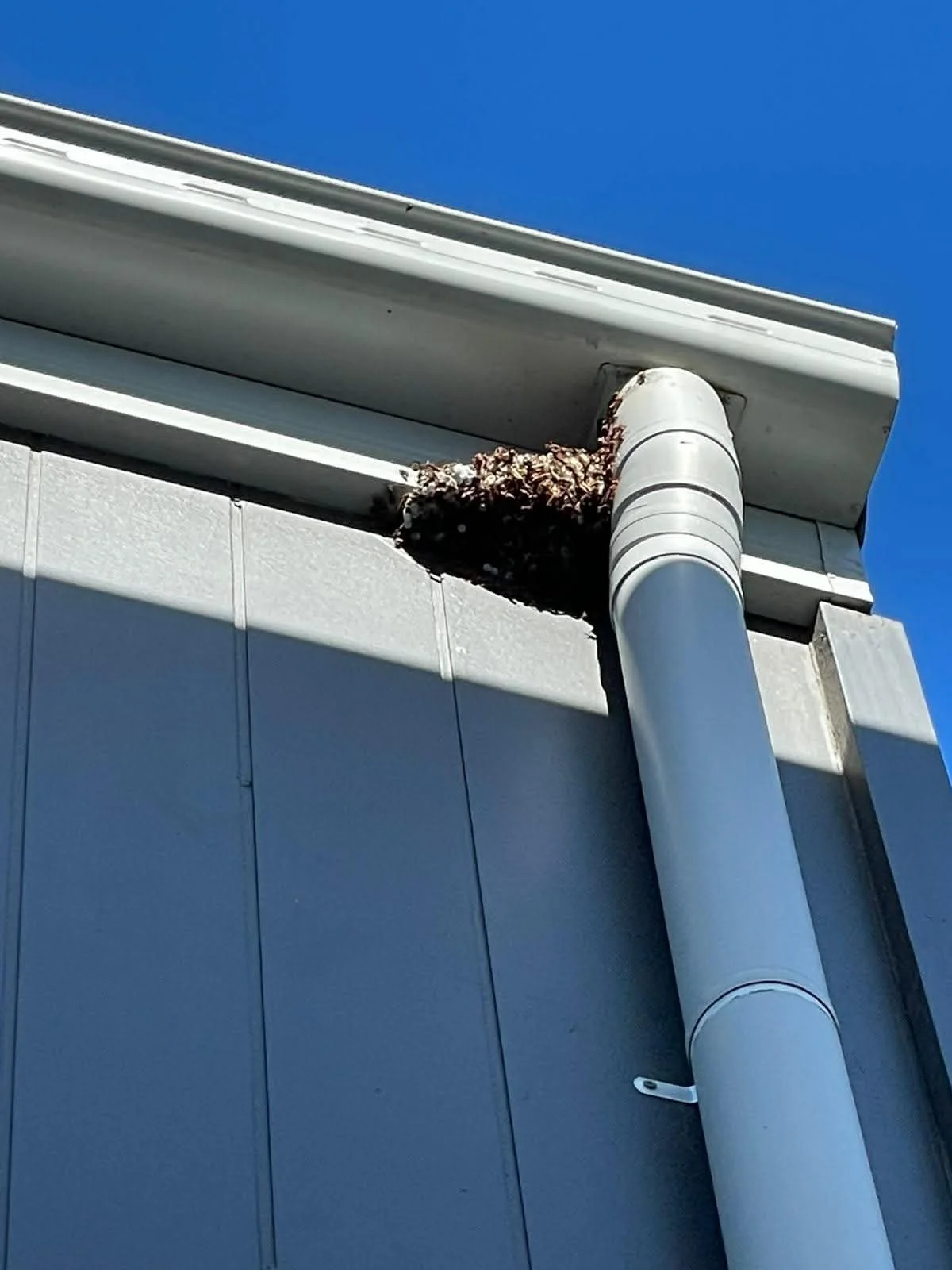
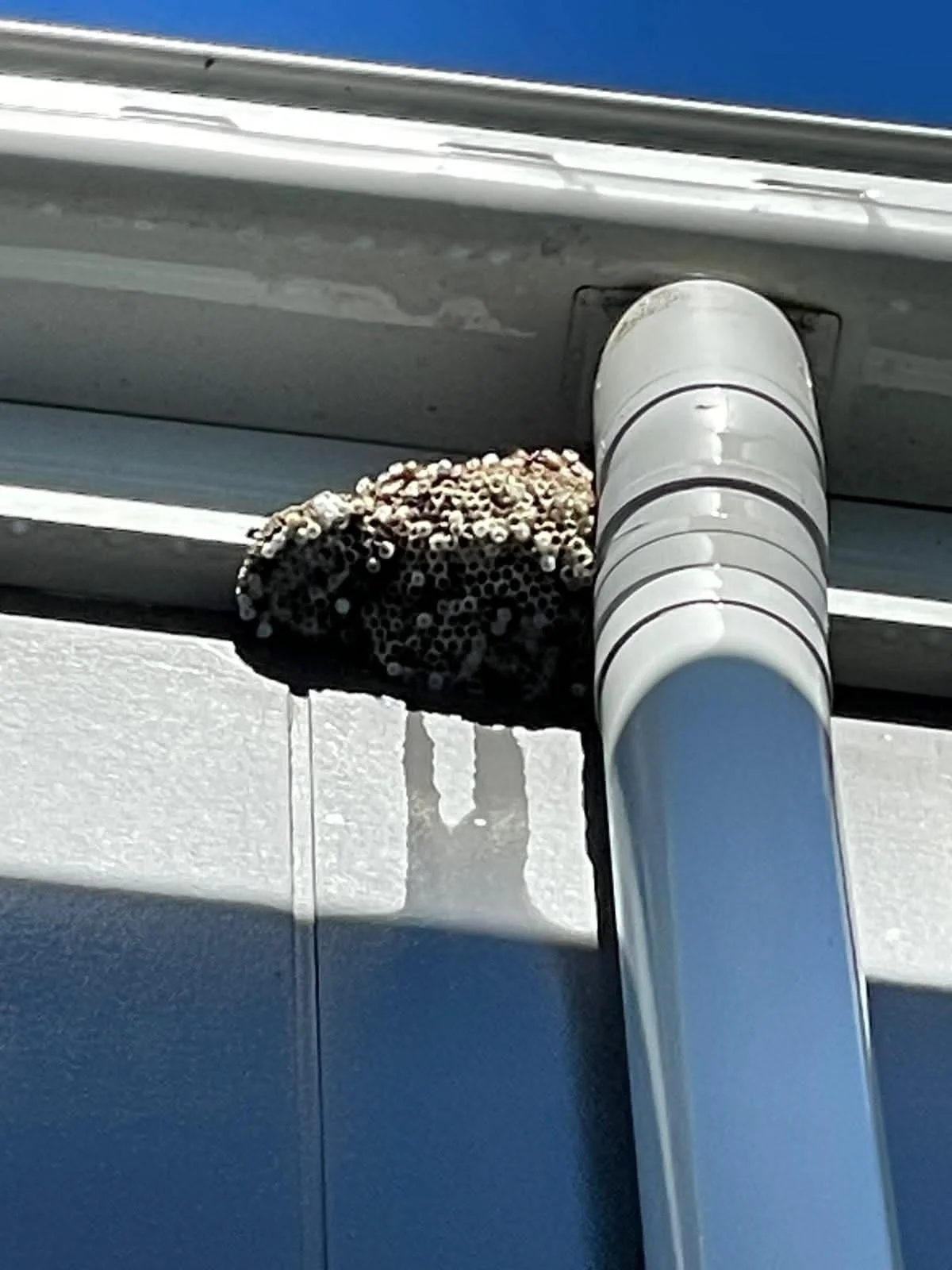
Paper wasps build exposed, umbrella-shaped nests containing visible cells. Their nests may be attached beneath eaves, branches, fences, sheds and outdoor structures.
European Wasps
European wasps have bright yellow and black markings and live in large communal colonies. Their nests may be underground or concealed inside wall cavities, ceilings, logs and trees, with only a small entrance visible.
Mud-Dauber Wasps
Mud-dauber wasps construct distinctive mud nests in sheltered areas of houses, buildings and outdoor structures. They are generally solitary but may sting when handled or threatened.
Signs of a wasp nest
Signs of Wasp Activity
Possible signs include:
Numerous wasps regularly entered and left one location
An exposed paper-like nest beneath an eave or branch
A small entrance hole with frequent wasp activity
Wasps are entering gaps in walls, roofing or outdoor structures
Mud cells are attached to protected surfaces
Increased wasp activity around food, drinks or rubbish
A buzzing sound coming from a wall or ceiling cavity
Watching from a safe distance may help identify where the wasps are travelling. Don’t stand near or block the entrance.
Common nesting locations
Where Do Wasps Build Nests?
Wasps may nest:
Beneath eaves, awnings and verandas
Inside wall cavities and roof spaces
Around sheds, garages and outdoor structures
In trees, shrubs and hedges
Beneath decks or outdoor furniture
Inside hollow logs and tree cavities
In abandoned animal burrows
Underground in lawns and gardens
Around fences and retaining walls
Inside the unused equipment
A concealed nest may be much larger than the visible entrance suggests.
What customers should avoid
Found a Wasp Nest? Don’t Disturb It
If you discover a suspected nest:
Don’t strike, shake or spray it
Don’t block or seal the entrance
Don’t attempt to knock it down
Don’t mow, trim or dig close to it
Keep children and pets away
Avoid sudden movement near active wasps
Contact Pest In The West for advice
Blocking a nest entrance may cause wasps to search for another exit, including into the building.
Wasp stings
Can Wasp Stings Be Dangerous?
Wasp stings commonly cause immediate pain, redness and swelling. Unlike honeybees, wasps can sting more than once.
Some people may experience a severe allergic reaction known as anaphylaxis. Call 000 immediately if someone experiences difficulty breathing, swelling of the tongue or throat, persistent dizziness, collapse or other signs of a serious reaction.
Seek medical advice if you’re concerned about a sting or if multiple stings have occurred.
Professional wasp treatment
How Pest In The West Can Help
Elias will assess the nest location, type of wasp, level of activity and accessibility before recommending a treatment.
Depending on the situation, the service may include:
Identification of the wasp activity
Treatment of accessible exposed nests
Targeted treatment of concealed nest entrances
Treatment of suitable wall, roof or ground-nesting areas
Advice about when a nest can be removed
Recommendations for reducing future activity
Don’t remove or seal the nest immediately after treatment unless Elias advises that it is safe to do so.
Some nests inside structures may require access or repair by an appropriately qualified tradesperson after the wasps have been controlled.
Prevention advice
Helping to Reduce Wasp Activity
You can help make outdoor areas less attractive to wasps by:
Keeping rubbish bins closed
Cleaning food and drink spills promptly
Covering food and sweet drinks outdoors
Removing fallen or overripe fruit
Avoid leaving pet food outside
Inspecting eaves and outdoor structures regularly
Sealing suitable gaps only after confirming they are inactive
Keeping garden and storage areas tidy
Not every wasp around a property indicates an established nest. Regular travel to one particular location is a stronger warning sign.
Need Help With Wasps?
If you’ve found a wasp nest or noticed regular activity around one area, don’t disturb it. Pest In The West can assess the problem and recommend an appropriate treatment.
Call Elias on 0422 363 988 or request a free quote online.