
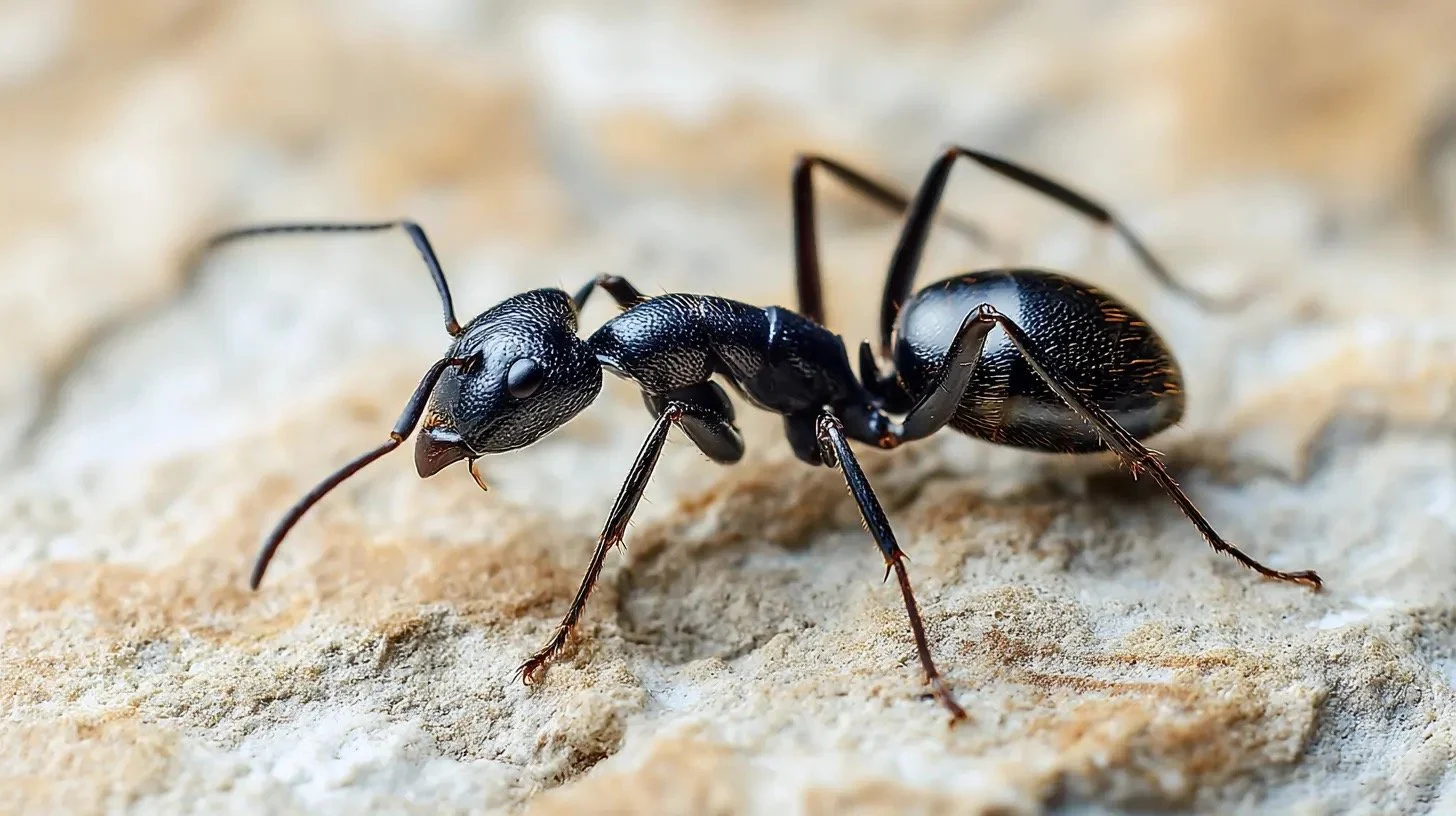
Common signs of an ant problem
Signs of Ant Activity
Common signs include:
Regular ant trails inside or outside the property
Ants gathering around food, water or pet bowls
Activity around cupboards, sinks and appliances
Ants entering through cracks, windows or door frames
Soil or debris appearing around small nesting holes
Ant activity around paths, gardens and building edges
Winged ants emerging from a nest
A few visible ants may be workers travelling from a much larger hidden colony.
Why do ants enter properties?
Why are ants entering your property?
Ants generally enter buildings while searching for food, water and shelter. They may be attracted by:
Crumbs, grease and food residue
Unsealed food and rubbish
Pet food left out
Leaking taps or plumbing
Moisture around kitchens and bathrooms
Honeydew-producing insects on garden plants
Cracks and gaps around the building
Ants leave chemical trails that help other workers travel between the nest and a food or water source. This is why a small amount of activity can quickly develop into a noticeable trail.
Where ants may nest
Common Ant Nesting Areas
Depending on the species, ants may nest:
Beneath paths, pavers and concrete edges
In lawns, gardens and rockeries
Around trees, stumps and plant roots
Inside wall cavities and roof voids
Behind cupboards and skirting boards
Around window and door frames
In decaying or moisture-affected timber
Near plumbing and other damp areas
Finding and correctly treating the nest is often more effective than treating only the ants you can see.
Common pest ants
Black House Ants
Small, dark ants that commonly form trails into kitchens and other indoor areas. They may nest outside or inside wall cavities, ceilings and subfloor spaces.
Coastal Brown Ants
Light to dark brown ants that commonly nest around paths, rockeries, wall crevices and behind skirting boards. Colonies may contain numerous connected nesting holes.
Sugar Ants
Larger ants that are often active at night. They commonly nest outdoors in soil, around plant roots, beneath rocks or in decaying timber and may travel considerable distances while searching for food.
Argentine Ants
Small brown ants that form well-defined trails and may establish large networks of connected nests. They are often found around paths, lawns, trees and building edges.
Species identification matters because different ants have different nesting habits and may respond differently to treatments.
Why DIY spraying may not solve it
Why Do Ants Keep Coming Back?
Household sprays may kill the worker ants that are visible without reaching the nest and queens responsible for producing more ants.
Some species have multiple nests or queens, while inappropriate treatment can cause certain colonies to relocate or divide. Successful control requires identifying the activity and selecting a treatment that targets more than the visible trail.
Avoid spraying over ant trails before Elias attends, as seeing the ants’ natural travel route may help him locate their entry and nesting areas.
Professional treatment
How Pest In The West Can Help
We begin by inspecting the areas where ants are travelling, feeding and possibly nesting. Treatment is selected according to the species, location of the nest, severity of the activity and surrounding property conditions.
Depending on the situation, treatment may include:
Professional ant baits
Targeted crack-and-crevice treatments
Treatment of accessible nesting areas
External perimeter and entry-point treatments
Treatment of suitable garden or paved areas
Practical prevention recommendations
Ant baits work by allowing worker ants to carry the bait back towards the colony. Baiting can take time, and follow-up treatment may be recommended for persistent or widespread infestations.
Prevention advice
Helping to Reduce Ant Activity
You can help make the property less attractive to ants by:
Cleaning crumbs, grease and spills promptly
Keeping food in sealed containers
Emptying and cleaning rubbish bins regularly
Avoid leaving pet food out for extended periods
Repairing leaking taps and pipes
Sealing suitable cracks and entry gaps
Trimming vegetation away from the building
Addressing excessive moisture around the property
These measures can support professional treatment, although they may not eliminate an established colony on their own.
Ant Control Sydney
Ants can quickly become a nuisance when they establish nests in gardens, walls, roof voids, kitchens and other areas around a property. Worker ants may enter through very small gaps and form visible trails while searching for food and water.
Pest In The West provides professional ant inspections and targeted treatments for residential, commercial, industrial and strata properties across Sydney. We identify the ant activity, investigate likely nesting and entry areas, and recommend a treatment suited to the species and property.
Need Help With Ants?
If ants keep returning or you’re unsure where they are coming from, Pest In The West can inspect the activity and recommend a targeted treatment for your property.
Call Elias on 0422 363 988 or request a free quote online.